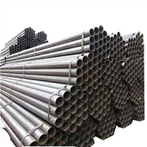
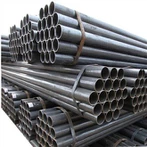
Hot rolling and cold rolling are two different processes used in the production of pipes and various metal products. The main differences between hot rolling pipes and cold rolling pipes are related to the temperature at which the rolling process occurs and the resulting characteristics of the finished product.
Temperature:
Hot Rolling: In hot rolling, the material is heated to a high temperature (above its recrystallization temperature) before being passed through the rolling mill. The high temperature makes the material easier to deform and reduces its hardness.
Cold Rolling: In cold rolling, the material is rolled at room temperature or slightly above it. There is no pre-heating involved in this process. Cold rolling generally results in a harder and stronger material compared to hot rolling.
Material Properties:
Hot Rolling: The high temperatures during hot rolling can cause a recrystallization of the material, resulting in a refined grain structure and improved mechanical properties. However, it may also lead to a less precise dimensional accuracy and a rougher surface finish.

Cold Rolling: Cold rolling produces a smoother surface finish and tight dimensional tolerances. The material tends to have higher strength and hardness due to strain hardening, but the grain structure may not be as refined as in hot-rolled products.
Surface Finish:
Hot Rolling: The surface finish of hot-rolled pipes is often rougher compared to cold-rolled pipes. Hot-rolled products may require additional processes like pickling or descaling to improve surface quality.
Cold Rolling: Cold-rolled pipes generally have a smoother and shinier surface finish, making them suitable for applications where appearance is important.
Dimensional Accuracy:
Hot Rolling: Hot-rolled pipes may have less precise dimensional accuracy compared to cold-rolled pipes. The cooling process after hot rolling can introduce some shape variations.
Cold Rolling: Cold-rolled pipes typically have tighter dimensional tolerances and more consistent shapes.
Cost and Efficiency:
Hot Rolling: Hot rolling is often more cost-effective for large-scale production and can be more efficient for shaping thicker materials.
Cold Rolling: Cold rolling is often preferred for producing thinner materials and for applications where dimensional precision and surface finish are critical.
In summary, the choice between hot rolling and cold rolling depends on the specific requirements of the final product, including factors such as material properties, surface finish, dimensional accuracy, and cost considerations. Each process has its advantages and limitations, and the selection is based on the desired characteristics of the finished pipes or metal products.