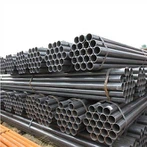
Welded steel pipes are classified according to material and performance. We can usually be divided into: wire rods, large-diameter straight seam steel pipes, stainless steel pipes, etc. They all have one thing in common, that is, they are all types of steel pipes with welding purposes. Applied in the product manufacturing process. But according to the size of the product you make, we usually choose to use different welded steel pipes, because only the most suitable steel pipes can produce the most cost-effective products. But when we all purchase them, how do we ensure their quality?
Method/Step
Large-diameter straight seam steel pipes have become the first choice steel pipes for large-scale oil and gas transportation projects at home and abroad due to their large wall thickness, good material quality and stable processing technology. In the welded joints of large-diameter LSAW pipes, welds and heat-affected zones are the places most likely to produce various defects, while welding undercuts, pores, slag inclusions, lack of fusion, lack of penetration, weld bumps, and burn through , Welding crack is the main form of welding defects, and it is often the origin of quality accidents of LSAW pipes.
The quality control measures are:
1. Quality control before welding
1) First of all, the quality of raw materials must be checked, and the construction site can be formally entered after the inspection is qualified, and the use of unqualified steel is resolutely prevented.
2) The second is the management of welding materials. Check whether the welding materials are qualified products, whether the storage and baking system is implemented, whether the surface of the distributed welding materials is clean and rust-free, whether the coating of the welding rod is intact and whether there is mildew.
3) The third is the clean management of the welding area. Check the cleaning quality of the welding area, and there must be no dirt such as water, oil, rust and oxide film, which plays an important role in preventing external defects in the weld.
4) To choose a suitable welding method, the principle of first trial welding and subsequent welding should be implemented.
2. Quality control in welding
1) Check whether the specifications of the welding wire and flux are correct according to the welding procedure regulations to prevent the wrong use of welding wire and flux which may cause welding quality accidents.
2) Supervise the welding environment. When the welding environment is not good (temperature lower than 0℃, relative humidity greater than 90%), corresponding measures should be taken before welding.
3) Before pre-welding, check the groove dimensions, including gaps, blunt edges, angles and staggers, whether they meet the process requirements.
4) Whether the welding current, welding voltage, welding speed and other process parameters selected in the automatic submerged arc welding process are correct.
5) Supervise the welding personnel to make full use of the length of the pilot arc plate at the end of the steel pipe during automatic submerged arc welding. The use efficiency of the pilot arc plate during the internal and external welding of the straight seam steel pipe is strengthened, which helps to improve the quality of pipe end welding.
6) Supervise whether the welding personnel clean up the slag first during repair welding, whether the joints have been thoroughly treated, and whether there is oil, rust, slag, water, paint and other dirt at the groove.
How to ensure the quality of the wire rod?
1. Cold processing
Cold working method is also called mechanical correction method. It uses mechanical force to correct welding deformation. It is generally suitable for small size weldments or weldments with small deformation. Commonly used tools include jacks, presses, and plate levelers. When correcting, first fix the weldment between the supports, and then apply a force opposite to the welding deformation direction to make the opposite plastic deformation and compensate the original deformation. The cold working method is not suitable for steel materials that tend to be brittle.
2. Thermal processing
The hot working method is also called flame correction method, which uses the temperature of the flame to locally heat the steel. When it is cooled, a new local deformation is generated, thereby offsetting the old deformation and achieving the purpose of correction. Correct selection of heating position, temperature and cooling time can get a good correction effect. The higher the heating temperature, the stronger the correction ability, and the lower the heating temperature. Generally, it should be controlled between 600-800℃ and not more than 900℃. Gas welding torch heating is often used. The hot working method is suitable for low-carbon steel structures and some ordinary low-alloy steel structures. Thermal processing is subdivided into three types: point heating, linear heating, and triangular heating. Point heating is mainly used to correct the uneven deformation of the sheet. In general, the greater the thickness of the steel plate, the greater the deformation, the more heating points, the larger the diameter, and the smaller the spacing. There are three basic forms of linear heating: linear, curved, and circular heating, which should be selected as appropriate for specific applications. Triangular heating is mainly used for bending deformation of steel beams and frame structures.